
Technical Article · Precision Cooling
Chilled Water vs Direct Expansion: Which Precision Cooling Fits Your Load
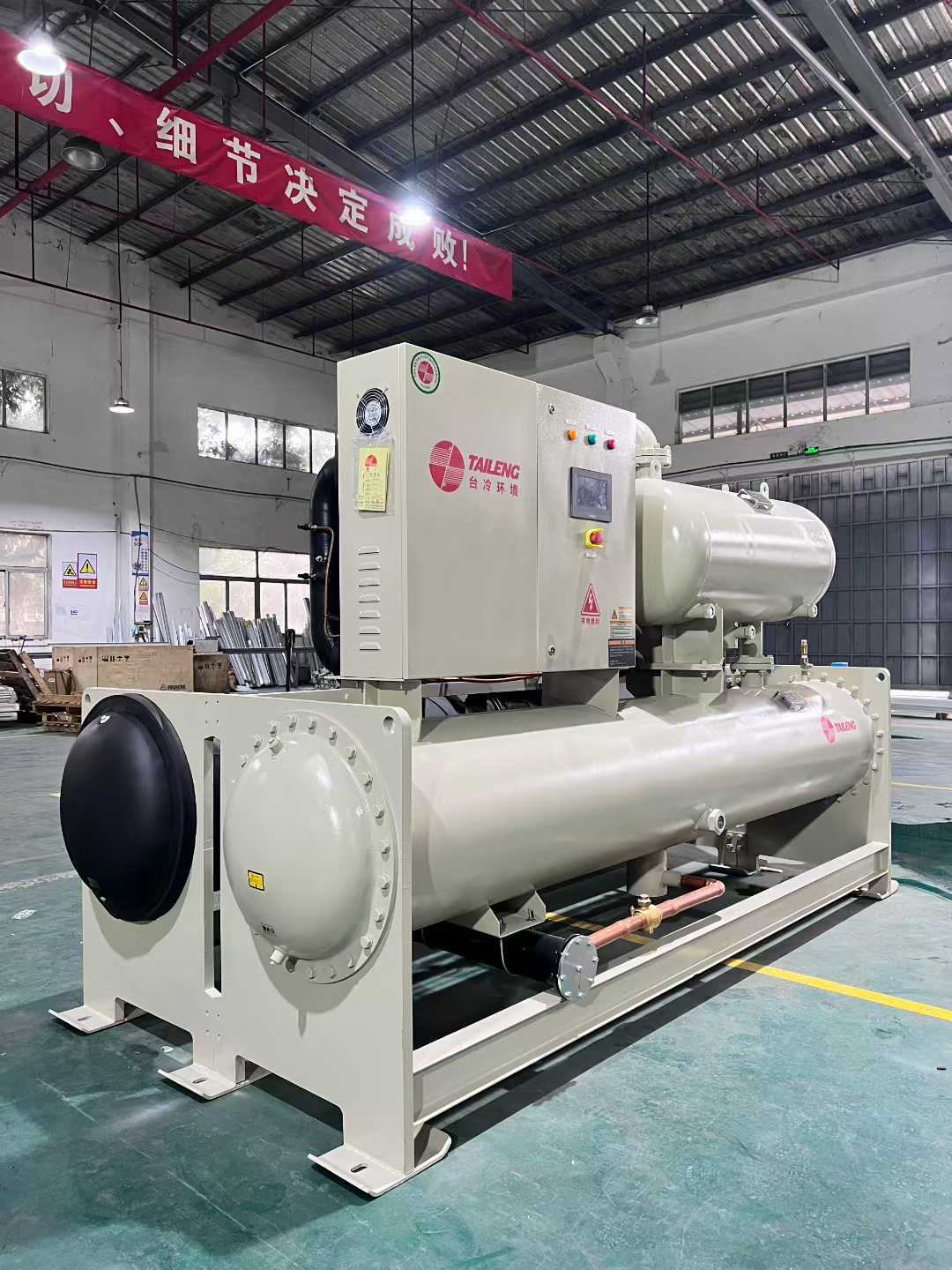
Two topologies, one question
Precision cooling splits into two architectures. In a direct expansion (DX) system, the refrigerant evaporates inside the coil that sits in the conditioned space, so the cooling circuit runs all the way to the load. In a chilled water system, a central chiller produces cold water, pumps carry it to the terminal units, and the refrigerant loop never leaves the plant room.
The two sound interchangeable until you look at load profile. That is where the decision is actually made. DX is a point-to-point solution; chilled water is a distribution solution. Which one fits depends less on brand preference and more on three things: how the load varies, how far the heat has to travel, and how much you care about part-load efficiency and control stability over the equipment's life.
When DX precision cooling is the right call
Direct expansion wins when the load is concentrated, steady, and close to the heat source. Because the refrigerant carries away heat without an intermediate water loop, DX systems are simpler: fewer components, no pump room, no water treatment, no freeze risk in cold climates.
- Small to mid-size loads. A single production line, a small server room, a lab or a cleanroom under a few hundred kW of sensible load is comfortably served by one or two packaged DX units.
- Scattered or hard-to-reach locations. Where running chilled-water pipe is impractical, factory-charged DX units move the refrigeration to the load instead of moving water to it.
- Short project timelines. Packaged DX units are factory-charged and factory-tested, so on-site work is mostly positioning, ducting and power — a meaningful schedule advantage.
- Isolated operation. Each unit stands alone. One DX unit failing does not take down a plant-wide cooling loop, which matters when the load is a single critical line rather than a whole facility.
The trade-off is part-load behaviour. A fixed-speed DX compressor cycles on and off as the load dips, and rapid cycling is exactly what precision cooling cannot tolerate — it produces temperature swing and shortens compressor life. Modern variable-capacity DX compressors soften this, but they still cannot match a chilled-water system that serves many terminals from one efficient central plant.
When chilled water precision cooling is the right call
Chilled water takes over when the load is large, distributed across many zones, or swings hard between peak and idle. One central chiller plant can serve dozens of precision air handlers, fan-coil units or CRAC (computer room air conditioning) terminals, each sized for its own zone and controlled independently.
- Many zones, one plant. A factory floor, a multi-line cleanroom or a data hall with many aisles all draw from the same chilled-water loop, which is cheaper to build and run than dozens of independent DX systems.
- Deep part-load efficiency. A screw or centrifugal chiller unloads smoothly and keeps its efficiency over a wide operating range. When only a fraction of the zones are running, the central plant stays efficient while individual DX units would be cycling.
- Long refrigerant-free distribution. Water carries heat over hundreds of metres with modest pump energy. Refrigerant lines, by contrast, suffer pressure drop and oil return limits that cap how far a DX circuit can reach.
- Redundancy and N+1. A chilled-water plant can add a standby chiller or a second pump so a single failure never stops cooling — a standard requirement in data centers and continuous-process plants.
The cost of that flexibility is complexity. Chilled-water systems need pumps, a water treatment program, expansion and makeup water, and a control system that coordinates the chiller, the pumps and the terminals. They also carry a higher first cost until the load is large enough to justify the infrastructure.
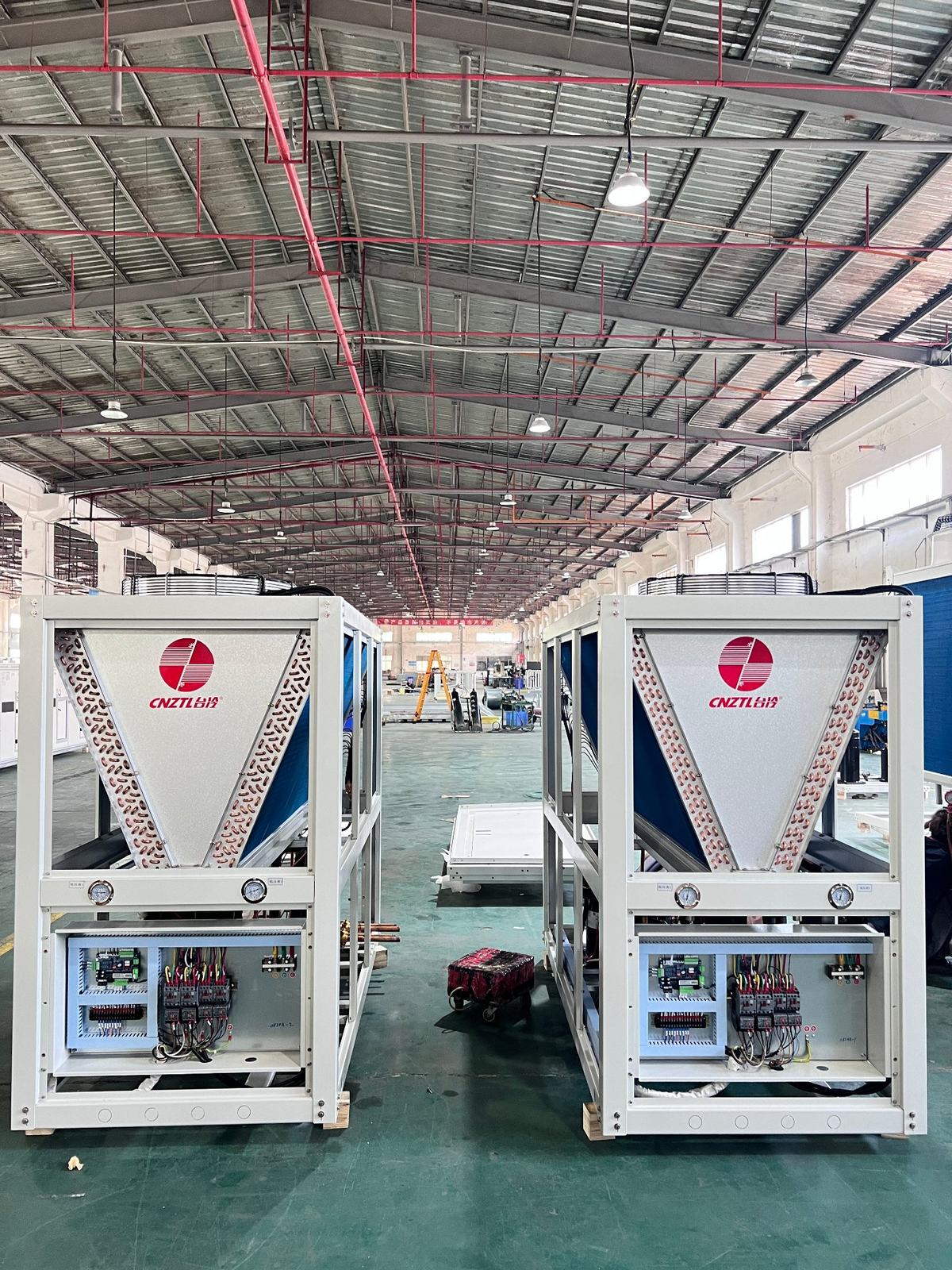
How to decide, in four checks
Rather than start from a vendor's preference, start from these four numbers on your own load sheet.
- Total and per-zone load. Add up the sensible and latent load. Under roughly 300–500 kW concentrated in one or two spaces, DX is usually the cheaper, simpler answer. Above that, or spread across many zones, chilled water starts to pay back.
- Load diversity. If the zones never peak at the same time, chilled water lets a smaller central plant serve a larger aggregate load. DX must be sized zone by zone, so diversity is wasted.
- Criticality and redundancy. A load that must never stop cooling points toward a chilled-water plant with N+1 pumps and chillers. A load that can tolerate occasional cycling and per-unit failure can live with DX.
- Site water and space. Chilled water needs water, a pump room and a treatment program. A site with scarce or poor water, or no room for a plant, may push you toward air-cooled DX or air-cooled chillers instead.
Control stability is the part most buyers under-rate
Precision cooling is judged on how tightly it holds temperature and humidity, not on peak capacity. That is where the two topologies diverge most sharply at part load. A chilled-water terminal modulates water flow through its coil and holds a very flat temperature curve, because the central plant absorbs the load swings. A DX unit must either cycle or ramp its compressor, both of which leave a wider temperature band unless the compressor is a true variable-speed unit.
For a lab, a metrology room or a data center aisle where the spec is ±1 °C or tighter, the control stability of chilled water is hard to beat. For a general production space where ±2 °C is acceptable, a well-chosen variable-capacity DX unit is often the more economical route to the same comfort and process outcome.
The hybrid reality
Most real plants do not sit cleanly on one side of this line. A common, sensible pattern is a chilled-water plant for the large process and cleanroom zones, with packaged DX units handling isolated or auxiliary spaces that would be expensive to pipe. The two topologies coexist fine — the mistake is forcing one topology across a load profile it was never sized for.
Key takeaways
- DX suits concentrated, steady, close loads under a few hundred kW; chilled water suits large, distributed or highly diverse loads.
- Part-load efficiency and control stability strongly favour chilled water as the zone count and load swing grow.
- Redundancy, water availability and distribution distance are the tie-breakers that decide borderline cases.
- A hybrid of central chilled water plus local DX is a legitimate, common design — the topology should follow the load, not the other way around.
Not sure whether your load calls for chilled water or DX?
Send us your load sheet and site constraints — we’ll recommend a topology and size the plant for your worst month.