
Application Note · Food & Beverage HVAC
Air Handling for Food & Beverage Processing: Hygiene, Filtration and Pressure
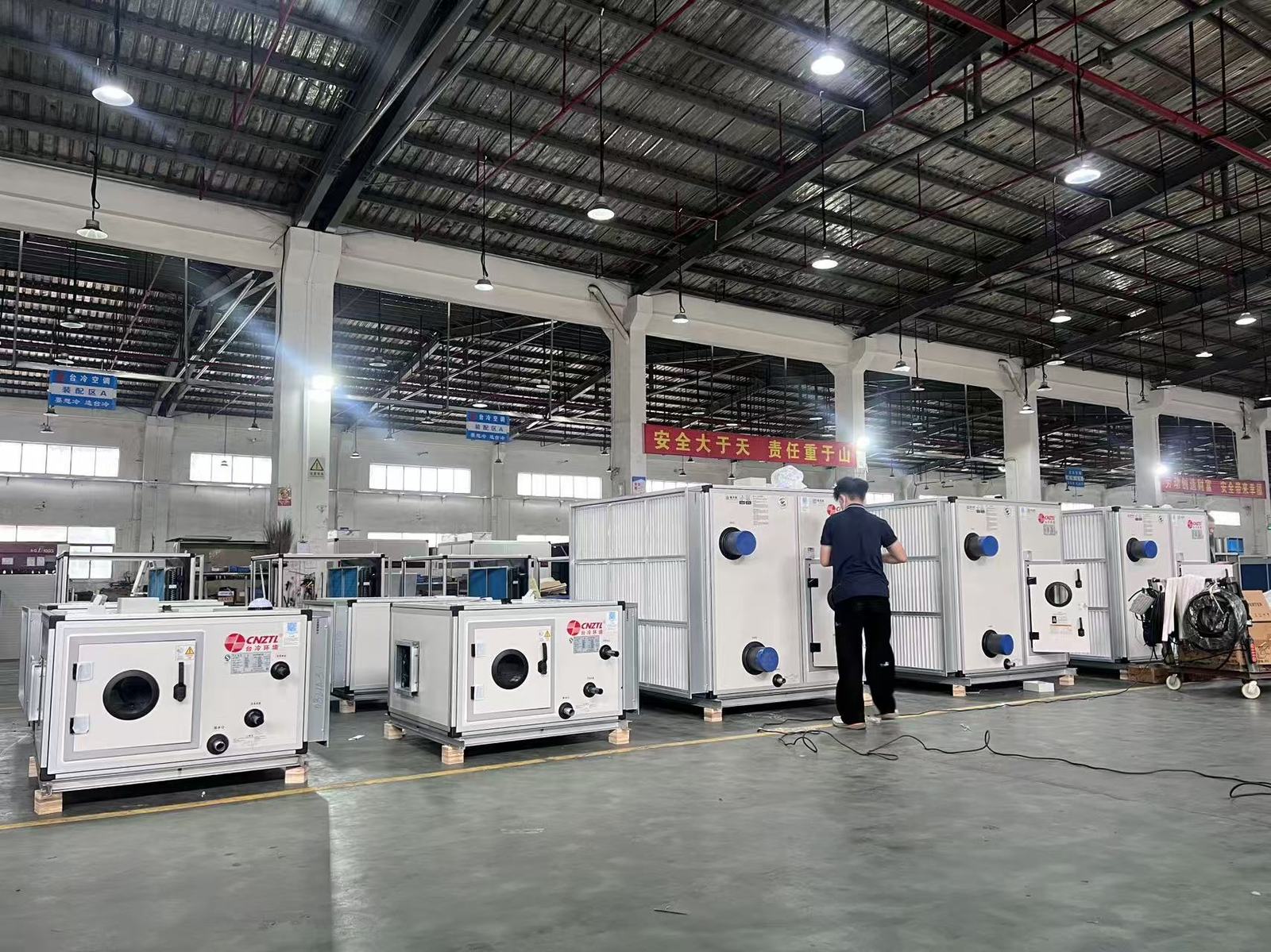
Why food processing HVAC is different
Air in a food or beverage plant is not just a comfort variable — it is a raw material. Every cubic metre of supply air that touches product carries whatever the filters let through: airborne mould spores, yeast, bacteria, and particles that settle on open surfaces. In high-humidity production halls the air itself can become the contamination route, because condensation on cold surfaces gives microbes both the moisture and the substrate they need to grow.
This is why food processing HVAC is designed around three requirements that ordinary comfort air conditioning does not have. First, filtration is staged, so that progressively finer filters remove the spores and particles that matter for the zone’s hygiene class. Second, air pressure is managed in cascades, so air always moves from the cleanest processing area toward dirtier or ambient spaces rather than the reverse. Third, condensation is engineered out — coils, casings and ducts are sized and controlled so they do not drip onto product or create wet spots where bacteria thrive.
The filtration stages that actually matter
A hygienic food and beverage air handling system typically stacks filters in three stages inside the AHU:
- Pre-filter (G4) — captures coarse dust and protects the finer stages downstream, extending their service life. This is the stage that gets loaded first in a dusty ambient environment.
- Medium filter (M6–F8 / F7–F9) — the workhorse for food zones, removing the majority of particles in the 1–10 µm range where many airborne mould spores sit.
- Final / high-efficiency stage (H13–H14 HEPA) — reserved for zones that must meet cleanroom-like hygiene classes, such as filling, packaging of sensitive products, or areas where product is openly exposed.
The decision is not “more filtration is always better.” Every added stage raises fan energy and static pressure. The right question is what the zone’s product actually requires: a raw-ingredient warehouse does not need HEPA, while an open-fill line handling a shelf-stable beverage almost certainly does. Matching the filter class to the hygiene class — rather than defaulting to the maximum — is where operating cost is won or lost.
Pressure cascades keep contamination out
Filtration is only half the story. Even a well-filtered AHU is defeated if air leaks back into the clean zone through doorways, dock openings or unsealed panels. The defence is a pressure cascade: each zone is held at a controlled differential pressure relative to its neighbour, so the net airflow always flows outward from the hygienic core.
In practice this means the filling and packaging room is held positive relative to the corridor, which is held positive relative to the outside. A differential of roughly 10–15 Pa between adjacent zones is the common working target — enough to establish directional airflow, low enough to keep doors operable. The air balance has to be re-verified when doors open, when a transfer tunnel is added, or when production volume changes, because even a small imbalance in supply versus extract can silently reverse the cascade.
Condensation is the enemy you cannot see
Food plants run humid — from washing, cooking, steam and open-water processes. The single most common hygiene failure is not a dirty filter but a cold surface that condenses: a supply diffuser sweating over a filling line, a chilled-water pipe dripping in a corridor, a casing panel below dew point. Each wet patch becomes a growth site, and the resulting droplets can carry contamination directly onto product.
Controlling this is a design problem, not a maintenance afterthought. Supply-air dew point is held low enough that surfaces stay dry at the target room condition; coil sections are drained and sloped so condensate leaves the unit instead of pooling; and casings are insulated and sealed so the panel surface never crosses the dew point. In high-humidity processing areas, a dedicated dehumidification stage — cooling coil plus reheat, or a desiccant wheel for very low dew points — is often the difference between a hall that stays dry and one that constantly fights mould.
What to specify for a food and beverage AHU
When a food manufacturer or contractor writes an air handling specification, a few parameters do most of the work of protecting the product:
- Hygiene-friendly internal surfaces. Smooth, cleanable casings with no internal ledges, dead corners or exposed fasteners where dust and water can collect. Food-grade AHUs favour stainless steel or coated galvanised internals and rounded internal transitions.
- Full-drain, sloped coil sections. Condensate must leave the unit by gravity, not sit and breed bacteria.
- Filter differential-pressure monitoring. So a loaded filter is replaced on data, not on guesswork — and so a torn filter is caught before it becomes a contamination event.
- Correct air balance and pressure control. Supply and extract sized together, with a control loop that holds the zone’s pressure cascade rather than temperature alone.
- Washdown-tolerant construction for wet zones, where housings and controls must survive periodic cleaning without corroding.
None of these is exotic. The cost difference between a food-grade AHU and a generic one is modest; the cost of a recall caused by an airborne contamination event is not. This is the calculation that drives the specification in serious food and beverage projects.
Key takeaways
- Treat supply air as a raw material: filter it to the zone’s hygiene class, not to a generic standard.
- Stage filtration G4 → M/F → HEPA, matching each stage to the product exposure in that zone.
- Hold a 10–15 Pa pressure cascade so air always flows outward from the hygienic core.
- Engineer condensation out of the design — dry supply air, sloped and drained coils, insulated casings.
- Specify cleanable, washdown-tolerant internals and filter differential-pressure monitoring.
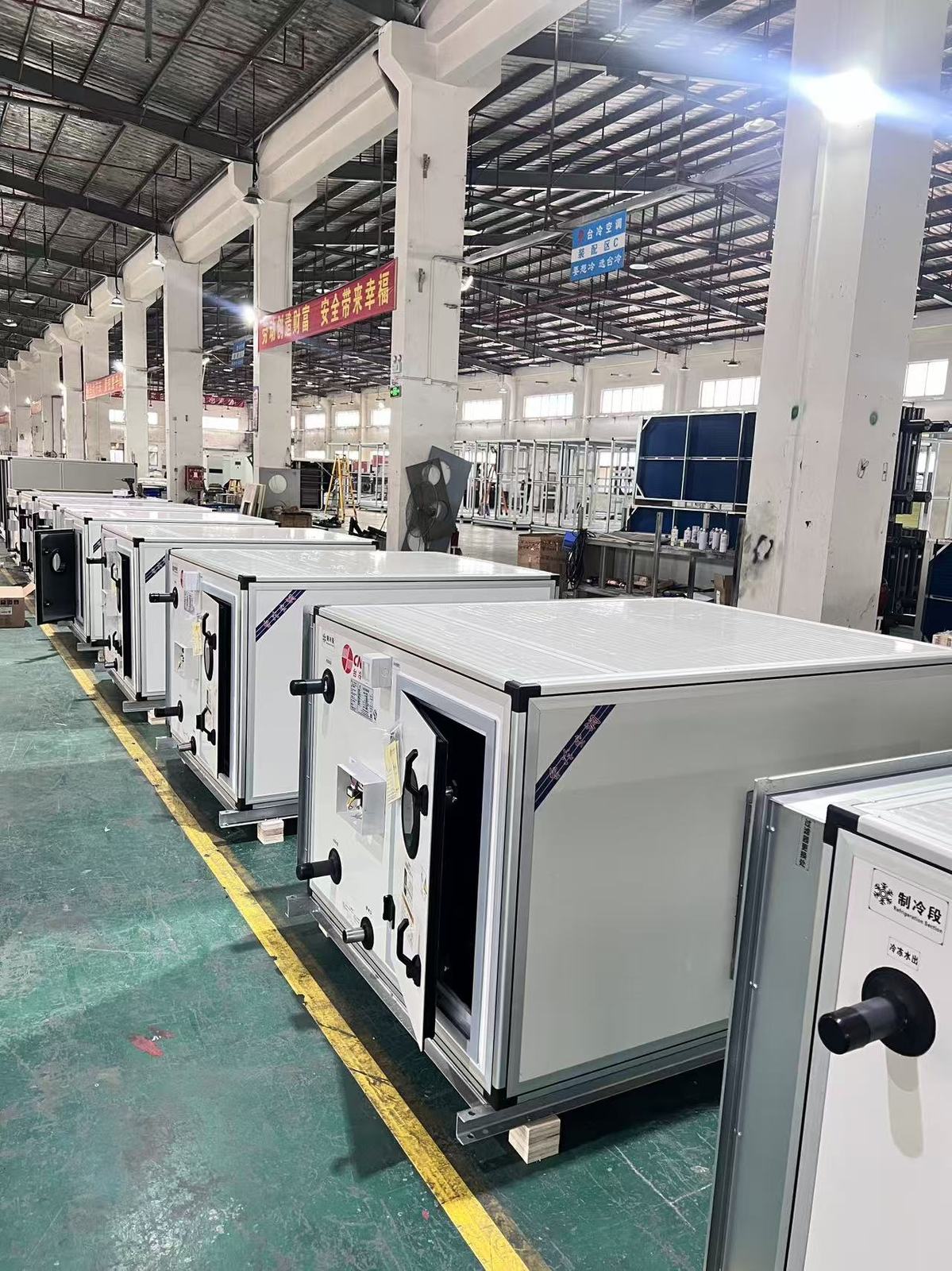
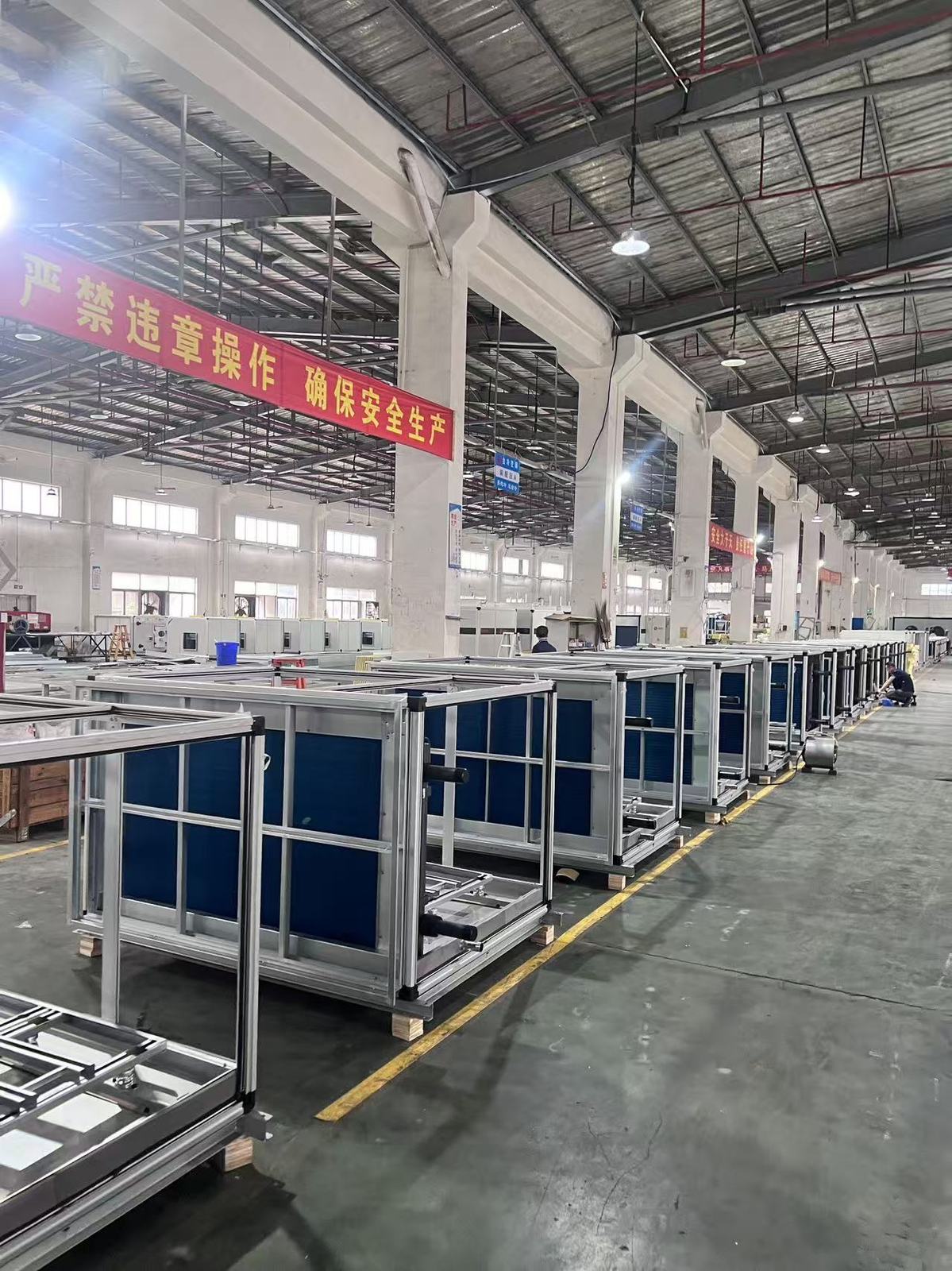
Planning hygienic air handling for a food or beverage line?
Tell us your zones, humidity loads and hygiene class — we’ll recommend the right filtration and pressure configuration.