
Technical Guide · Chiller Sizing
Screw Chiller Sizing: Matching Water-Cooled Chiller Capacity to Real Process Load
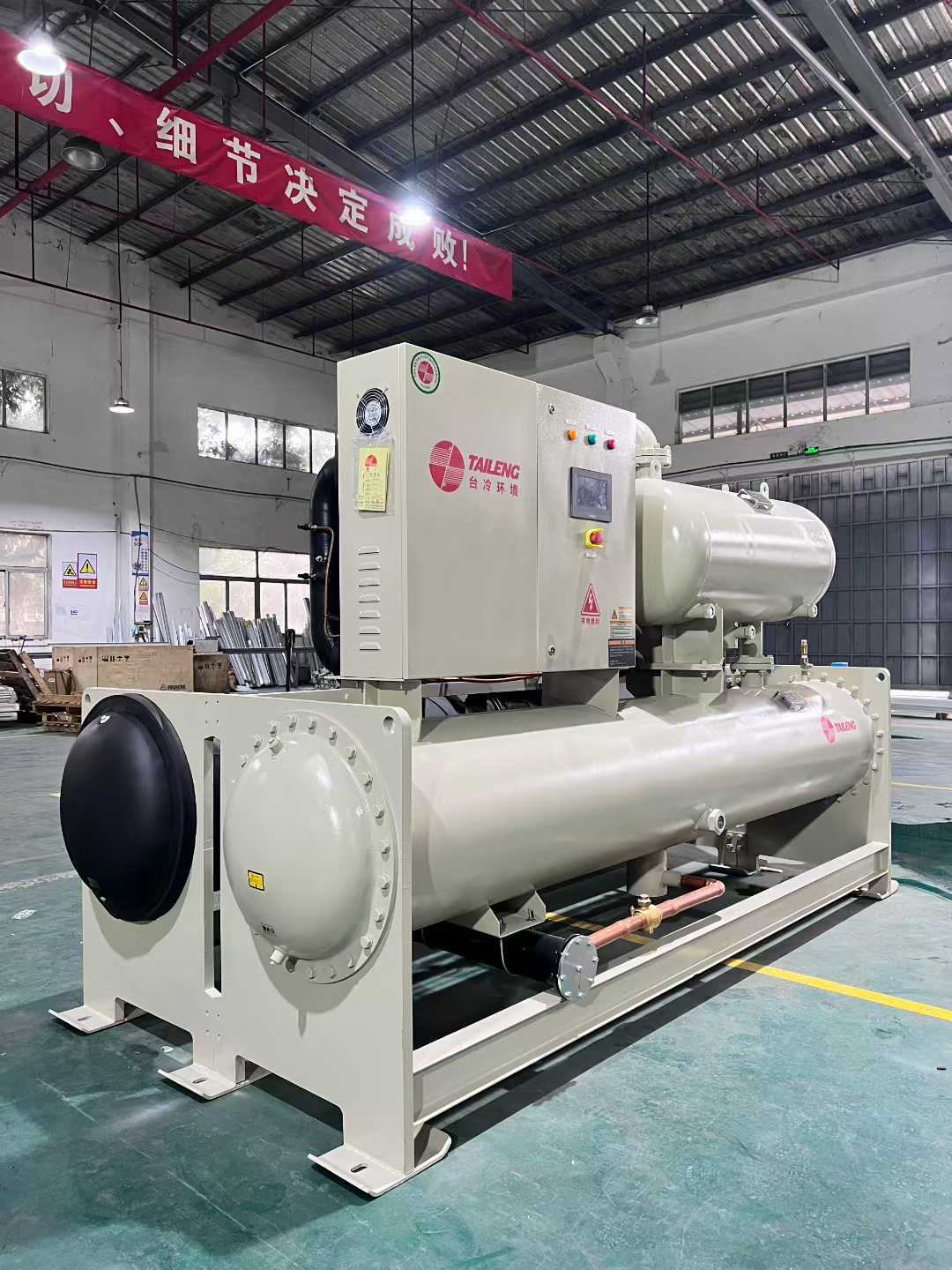
Why most chiller sizing goes wrong before the first quote
The most common mistake in a water-cooled screw chiller project is not choosing the wrong supplier — it is sizing against the wrong number. A process line may carry a nameplate heat load of 800 kW, but that figure is almost never the load the chiller has to reject in practice. Process equipment ratings are peak simultaneous draws, safety margins stacked on safety margins, and occasionally guesses inherited from an earlier plant.
When a plant buys a chiller sized to that number, it pays three times over. First in capital cost, on cooling capacity it will never use. Second in efficiency, because a screw chiller running at 30–40% of rated load sits outside its best part-load band. Third in maintenance, because a machine that cycles on and off wears faster than one that runs steady. The fix is to size the chiller against the real load profile, not the nameplate.
Build the load profile before you talk capacity
Before any chiller supplier should quote, the buyer needs a defensible answer to one question: how much cooling, at what water temperature, for how many hours a year? Getting there means separating the load into three parts and applying judgment to each.
1. Base process load — the number that actually runs
List every load that is genuinely continuous: reactors, extruders, welding cells, injection moulding machines, compressor intercoolers. For each, record its sustained heat rejection under normal production, not its rated motor power. A 100 kW motor driving a pump may reject only 60–70 kW to the cooling water on average. The base load is the sum of these sustained figures, and it is what the chiller must carry hour after hour.
2. Intermittent and batch load — apply diversity, not addition
Not everything runs at once. A vessel that cools in a 45-minute cycle after a two-hour filling stage does not add its full load on top of the base. Summing every peak gives a chiller that is oversized by 20–40%. Instead, apply a diversity factor: estimate the probability that intermittent loads coincide, and size for the realistic coincidence, not the worst-case stack.
3. Ambient and seasonal swing — size for the worst month that matters
A water-cooled screw chiller rejects heat to a cooling tower, and its capacity follows the ambient wet-bulb. On a hot, humid afternoon the same machine delivers less than it does at night or in the dry season. The chiller must be sized for the conditions that matter to production — usually the hottest humid month — but that does not mean adding margin on top of an already-peaked load. It means stating the design conditions clearly so the supplier can quote the right condenser and tower.
Water-cooled screw chiller vs. the alternatives at part load
Where a screw chiller earns its place is in the middle band: roughly 300 kW to 1,500 kW per machine, with a stable base load and long running hours. In that band a water-cooled screw machine consistently beats an air-cooled equivalent on full-load and part-load efficiency, because rejecting heat to a tower at wet-bulb keeps the condensing pressure lower than rejecting to ambient air at dry-bulb. The gap widens in hot climates, and it is why water-cooled screw chillers remain the default for continuous process cooling in Southeast Asia, the Gulf and coastal Africa.
Three selection rules follow directly from the load profile:
- Match the base load to one machine’s best part-load point. Screw compressors are most efficient between roughly 50% and 85% of rated load. Size the lead chiller so the base load sits inside that window.
- Use multiple smaller machines instead of one large one. Two 600 kW chillers beat one 1,200 kW machine for plants where load varies, because one can run in its efficient band while the other stages or stops. This also buys N+1 redundancy for the cost of one extra frame, not a full spare plant.
- Ask for part-load data, not just full-load COP. A machine with a strong full-load COP can be mediocre at 40% load, which is where a real plant spends most of its hours. Demand IPLV or ESEER curves for the actual leaving-water temperature you will run.
The parameters a chiller supplier should ask for
A serious supplier will not quote until it has these. If a quote arrives without them, treat the number as provisional:
- Chilled-water supply and return temperatures (for example 7°C supply / 12°C return, or 10°C / 15°C for process cooling)
- Design ambient wet-bulb and dry-bulb at the site
- Cooling-water entering/leaving temperature to the condenser
- The load profile by season and time of day, not a single peak number
- Leaving-water temperature stability required by the process (±0.5°C or tighter)
- Space, power supply and any noise or refrigerant constraints on site
Supplying these up front shortens the quote cycle and, more importantly, prevents the supplier from padding for unknowns it should have asked about. Oversizing almost never comes from one big error; it comes from ten small safety factors layered by people who did not have the real profile in front of them.
Key figures to keep in mind
- A screw chiller runs most efficiently between roughly 50% and 85% of rated load
- Summing every peak process load typically oversizes the plant by 20–40%
- A water-cooled machine holds lower condensing pressure than air-cooled in hot climates, and the gap widens as ambient wet-bulb falls relative to dry-bulb
- Two smaller machines usually beat one large machine where load varies, and buy N+1 redundancy at a fraction of a full spare plant
- Part-load efficiency (IPLV/ESEER) matters more than full-load COP for a real plant running long hours off-peak
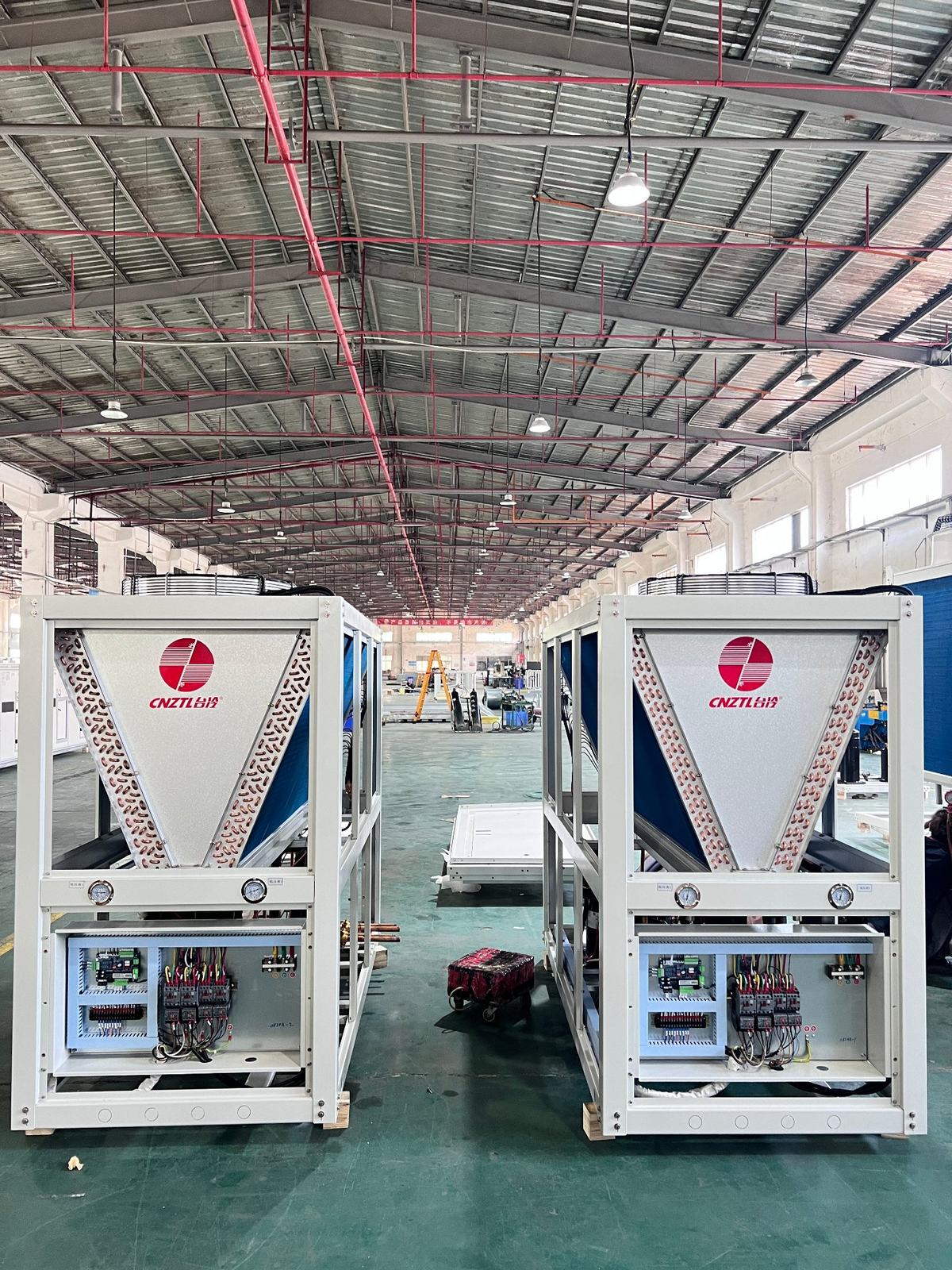
Sizing a water-cooled screw chiller for your plant?
Send us your load profile and design conditions — we’ll size the chiller against the real load, not the nameplate.