
Technical Guide · Pharmaceutical HVAC
Humidity Control in Pharmaceutical Cleanrooms: Why Relative Humidity Breaks Without a Dew-Point Design
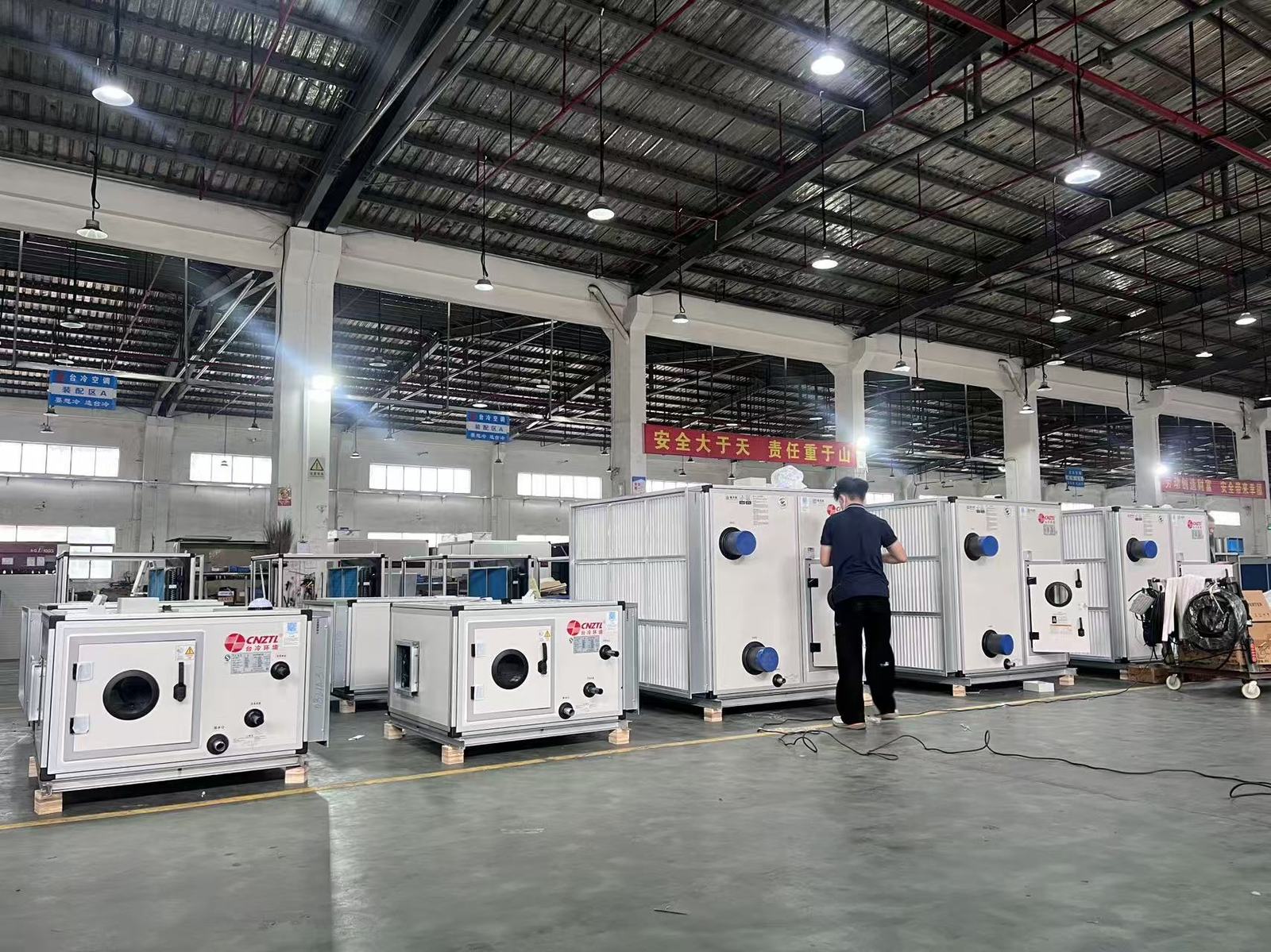
Most pharmaceutical cleanroom specifications name a relative humidity band — commonly 45–60% RH, sometimes tighter. The trouble is that relative humidity is not a thing you can control directly. It is the ratio of how much moisture is in the air to how much it could hold at that temperature, which means a room that holds 50% RH at 21 °C can drift the moment the supply-air temperature moves by a degree.
The engineering fix is to design and control to a dew point first, then let relative humidity fall out of it. This note walks through how pharmaceutical humidity control is actually specified — where a cooling coil is enough, where a desiccant wheel is needed, and the tolerance band that keeps a batch inside its validated range.
Why relative humidity control starts at the dew point
Relative humidity is temperature-dependent; dew point is not. At 21 °C, air at 50% RH has a dew point of about 10 °C. If the room warms to 23 °C with the same moisture content, the RH falls to roughly 45%; if it cools to 19 °C, the RH climbs to about 56%. The moisture never changed — only the reading did.
For this reason, a pharma cleanroom should carry two numbers in its specification: the target room temperature and the target dew point (or absolute humidity), with the RH band written as the resulting envelope. When the two are set independently, the control system can hold the dew point constant and let temperature do its own job without the two loops fighting each other. This is also what a reviewer wants to see during validation — a defined, measurable target rather than a vague “keep it comfortable” range.
Cooling coil or desiccant wheel: where the line falls
The first decision in pharmaceutical humidity control is which piece of equipment removes the moisture. The answer is a function of how low the dew point has to go.
- Cooling-coil dehumidification. A chilled-water or direct-expansion coil cools air below its dew point, condensing moisture out, then reheats to the supply temperature. It is the workhorse for the standard 45–60% RH range, where the target dew point sits comfortably above the coil's achievable leaving temperature. It is efficient when the coil surface can reach the required dew point without freezing and without an impractical reheat load.
- Desiccant (adsorption) dehumidification. A desiccant wheel pulls moisture out by adsorption rather than condensation, and can drive the dew point far below what a cooling coil can reach — useful for hygroscopic powders, effervescent products and stability chambers that need low-moisture air. The trade-off is a regeneration heat source and, typically, a post-cooling coil to remove the heat the wheel adds.
The practical rule: if the required dew point is within reach of a coil at a leaving temperature you can actually deliver, the coil is simpler and cheaper to run. If the target dew point drops below roughly 5 °C — or the space is dry-room grade — the specification shifts toward a desiccant wheel, often in combination with a cooling coil for pre-cooling.
What actually makes a batch go out of spec
Humidity failures in pharma cleanrooms rarely come from the dehumidifier being too small. More often they come from one of these four:
- Under-sizing the fresh-air (makeup) load. In a tropical or monsoon climate the outside air is the single biggest moisture source. If the dehumidification is sized to the recirculation load and the makeup air is treated as an afterthought, the room will not hold on a humid afternoon.
- Forgetting the internal moisture gains. Washdown, open vessels, wet processes and people all add moisture. A specification built from air-change rates alone will miss them.
- Pressure cascade leakage. Humid adjacent air pulled in through door undercuts and transfer openings pushes the dew point up even when the AHU is doing its job.
- No dew-point sensor at the point of control. Controlling to an RH sensor only, without a dew-point or humidity-ratio reference, lets temperature swings masquerade as humidity drift — and the two loops chase each other.
What to put in your specification
If you are writing or reviewing a pharmaceutical humidity control specification, five lines are worth getting right:
- State the target dew point and temperature together, with the RH band derived — not the other way round.
- Give the design outdoor condition (dry-bulb and wet-bulb) so the makeup-air load is defined, not assumed.
- List the internal moisture gains — processes, washdown, open water, occupancy — so they can be added to the load.
- Name the dehumidification method — coil, wheel, or a staged combination — and the regeneration energy source where a wheel is used.
- Define the tolerance band and the monitoring points, including a dew-point or humidity-ratio sensor at the point of control, so the system can be validated and then continuously monitored.
Key points
- Control the dew point first; relative humidity is the result, not the target.
- Cooling coils cover the standard 45–60% RH band; desiccant wheels take over for low-moisture and dry-room applications.
- Size for the fresh-air and internal moisture loads, not just the air-change rate.
- Specify the design outdoor condition, the internal gains, and the monitoring points up front.
About Taile
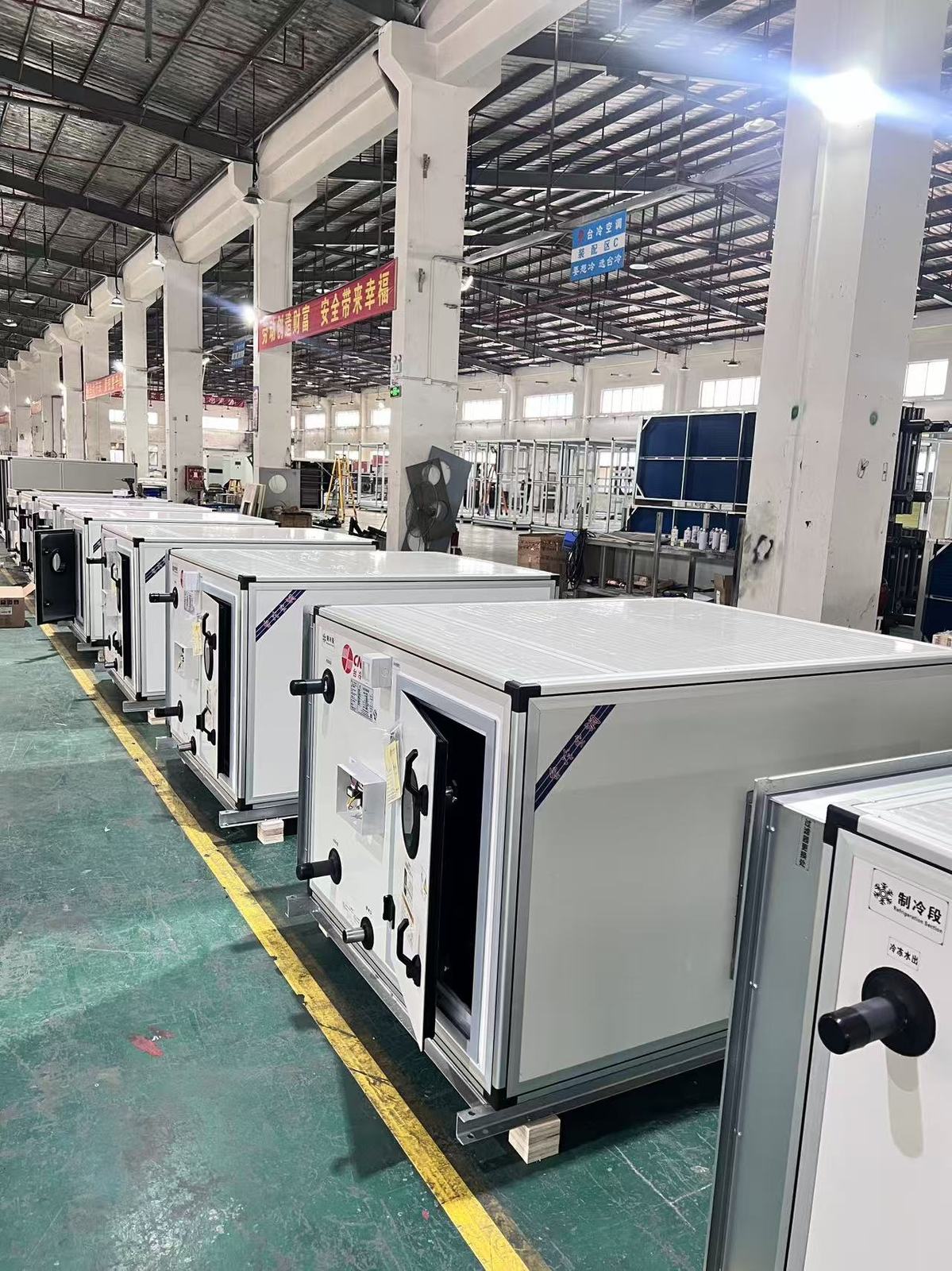
Shenzhen Taile Air Conditioning Equipment Co., Ltd. manufactures industrial and commercial central air conditioning equipment, including combined air handling units, water-cooled and air-cooled chillers, constant temperature and humidity units, data center cooling, dual-wheel desiccant dehumidification systems and fan coil units. The company supplies cleanroom, pharmaceutical and precision manufacturing projects in China and exports worldwide.
Specifying humidity control for a pharma cleanroom?
Send your target temperature, dew point and outdoor design condition. We will come back with a dehumidification method and an air-side configuration.