
Technical Guide · Rooftop Air Handling
Rooftop AHU Selection: Specifying Weatherproof Packaged Air Handling Units
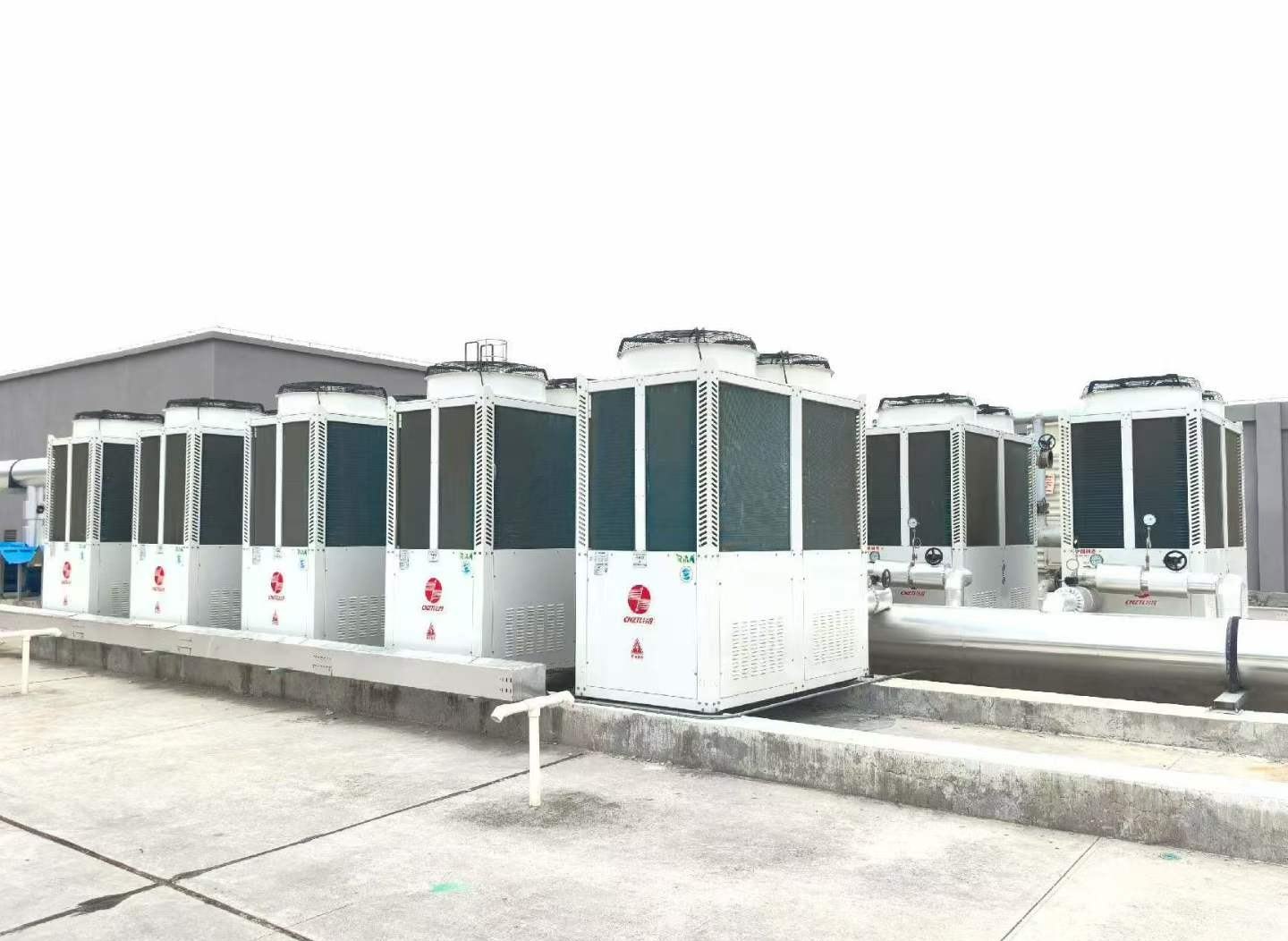
A rooftop AHU lives outside. Unlike an indoor unit in a plant room, it has to hold its own against rain, direct sun, salt air on a coast, and winter nights at ambient temperature — while still delivering stable temperature and humidity to the floor below. That single difference is why most rooftop selections go wrong: buyers specify the unit as if it were an indoor air handler, and only discover the gap after the first season of water ingress, corrosion or frozen coils.
This guide lays out the points that separate a rooftop air handling unit that lasts from one that fails quietly, and the parameters an AHU manufacturer should be held to at the tender stage.
1. Weather protection is a spec, not a coating
The first thing to pin down on a rooftop AHU is the casing. A unit exposed to weather needs a weatherproof roof with overhangs that keep rain off panel joints and door seals, sealed seams on the top and all upward-facing joints, and sloped surfaces so water cannot pool. Ask for the panel construction and the sealing arrangement in writing, not a photograph of a painted unit.
Corrosion class matters most for coastal and industrial sites. An inland temperate roof may be fine with a standard galvanised skin; a rooftop a few hundred metres from the sea, or above a plant that vents process gases, needs a higher corrosion class with treated panels and hardware. The deciding question is not "is it coated" but "which corrosion class was the casing built to, and which standard".
2. Integrated refrigeration or chilled water?
A rooftop packaged AHU falls into one of two families, and the choice drives everything downstream:
- Integrated DX (packaged rooftop). The cooling circuit is built into the unit — condenser, compressor and evaporator in one weatherproof casing. This suits single zones and roofs where running a chilled-water pipe is impractical. It removes the need for a central chiller, but the compressor and condenser now sit outdoors and must be rated for the site's ambient.
- Chilled-water rooftop AHU. The unit contains only coils, fans and filtration, fed by a central chiller. This is the default for multi-zone buildings or campuses where a plant room already exists. It is quieter on the roof and simpler to service, at the cost of a chilled-water distribution system.
The decision should follow the building's cooling architecture, not the supplier's catalogue. If the site already centralises cooling, a chilled-water rooftop AHU is usually the cleaner answer; if it is a standalone building, an integrated packaged unit avoids building plant-room infrastructure.
3. Curb, vibration and condensate
Three mechanical details decide whether a rooftop AHU runs quietly and safely for years:
- Roof curb and sealing. The unit mounts on a curb that raises it off the roof and forms a watertight interface with the roof membrane. The curb height, its sealing to the roof, and its alignment with the unit's return opening all have to be specified together, or water and air leakage appear at the joint.
- Vibration isolation. Rooftop fans transmit vibration straight into the roof structure, which turns it into audible noise in the space below. Spring isolators under the fans — and the whole unit where the structure is light — plus flexible duct connections, are the difference between an inaudible system and a constant low hum.
- Condensate and defrost. The condensate pan must slope to a drain that cannot back up under wind or blockage, and the drain must empty fully so a coil does not sit in water. On an integrated DX unit, the outdoor coil needs a defrost strategy for cold ambient so it does not ice over and lose capacity.
4. Air delivery and the space below
A rooftop AHU is usually a floor above the space it serves, so external static pressure and duct layout matter more than on an indoor unit. The fan must be selected for the full duct run and the fittings between the unit and the diffusers — under-specifying ESP is one of the most common causes of a rooftop system that never delivers design airflow. Where the roof carries several units, each one should be selected for its own duty point rather than copied from a neighbour, because duct lengths and static pressures differ from zone to zone.
On the control side, ask how the unit responds at partial load. A rooftop AHU in a mild season spends most of its hours below peak, so the fan and cooling stage should be able to unload smoothly — multi-stage or variable-speed fans, and capacity control that does not short-cycle the compressor on an integrated unit.
5. What to ask the manufacturer
Whether you are buying from a domestic supplier or an AHU manufacturer in China, hold the quotation to the same concrete lines:
- Casing corrosion class and weather sealing, named against a standard. "Weatherproof" is not a specification; a corrosion class and a described sealing arrangement are.
- Ambient operating range. The minimum and maximum outdoor temperature the unit is rated for, and what happens outside that range — especially defrost on a packaged DX unit.
- Fan duty point. Airflow, external static pressure and the fan curve at your actual duct run, not a catalogue nominal point.
- Vibration isolation and curb detail. Who supplies the curb, how the unit seals to it, and what isolation is included.
- Service access. Door and panel access for filter change and coil cleaning from a safe position on the roof, with the roof's wind exposure in mind.
Send your roof plan, the cooling load by zone, and the site's location and altitude. A competent manufacturer will come back with a weather class, a duty point and an installation detail — not just a model number and a price.
Key points
- Application: industrial and commercial buildings served from the roof
- Scope: weatherproof rooftop AHUs, packaged DX or chilled water
- Casing: weatherproof sealing and a corrosion class named against a standard
- Mechanical: roof curb, spring isolation and a fully draining condensate pan
- Air side: fan selected for the real duct run, with smooth partial-load control
- Selection basis: roof plan, zone cooling loads, location and altitude — not a catalogue model
About Taile
Shenzhen Taile Air Conditioning Equipment Co., Ltd. manufactures industrial and commercial central air conditioning equipment, including combined and rooftop air handling units, water-cooled and air-cooled chillers, constant temperature and humidity units, data center cooling, dual-wheel desiccant dehumidification systems and fan coil units. The company supplies new-energy, precision manufacturing and commercial projects in China and exports worldwide.
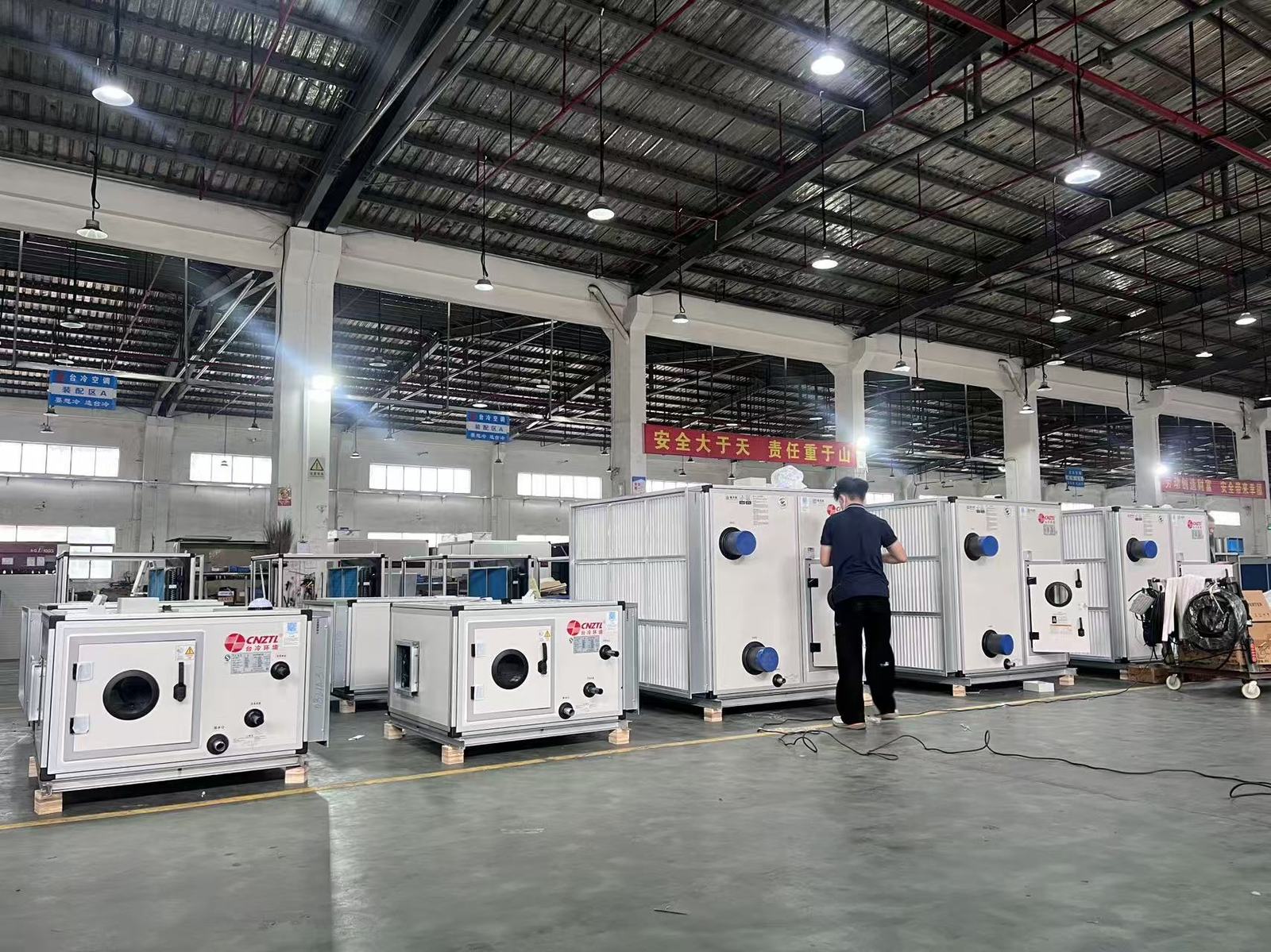
Specifying rooftop air handling for a building?
Send your roof plan and zone cooling loads. We will come back with a weather class, a duty point and a project proposal.